
2025 Spring Meeting: The Policy Landscape
Navigating Housing Policy Shifts
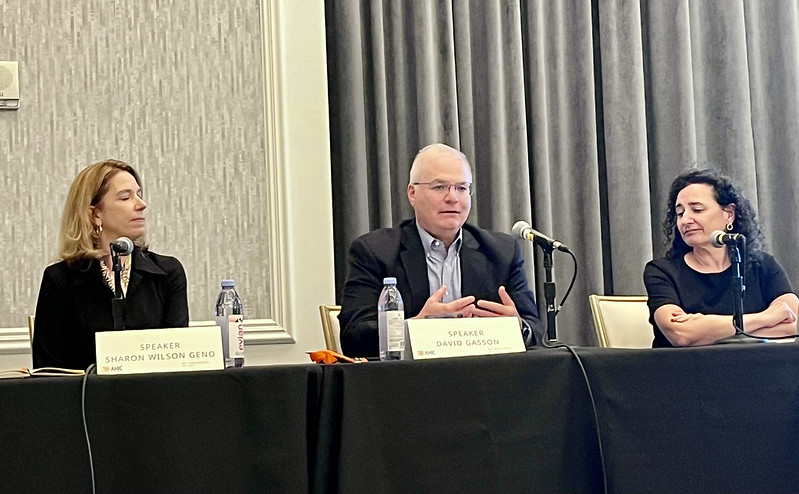
At AHIC's 2025 Spring Meeting, leading housing policy experts provided critical insights into significant housing and tax policy shifts under the Trump Administration and the new Congress. The session, moderated by Jennifer Schwartz, Director of Tax and Housing Advocacy at NCSHA, included David Gasson (MG Housing Strategies), Sharon Wilson Geno (National Multifamily Housing Council) and Sarah Brundage (National Association of Affordable Housing Lenders)
Congressional Legislative Activity and Reconciliation Bill
Over the coming weeks, Congress will navigate multiple intertwined legislative processes crucial to housing and tax policy, including a $5 trillion to $6 trillion tax reconciliation bill and the recently reintroduced Affordable Housing Credit Improvement Act.
Following the House's passage of the Senate budget resolution, legislators are now focused on assembling the reconciliation package. This bill, leveraging reconciliation rules to bypass Senate filibusters, requires only a simple majority vote. Key components include spending cuts, tax reforms, and funding allocations aligned with both presidential and congressional priorities, notably extensions of the Tax Cuts and Jobs Act (TCJA).
The House Ways and Means Committee has been working confidentially on drafting the tax provisions, and Speaker Johnson aims for the House to vote on this extensive bill by May 19, emphasizing the rapid progression of negotiations despite skepticism over feasibility given the bill's scale.
Housing advocates are working to ensure several LIHTC priorities are included in the reconciliation bill. These include a 50% increase in the 9% LIHTC allocation, restoration of the 12.5% allocation lost in 2021, a reduction of the 50% bond financing test to potentially 25%, and targeted basis boosts (50% for extremely low-income units, 30% for bond-financed, rural, and tribal projects). Fully implementing these provisions would cost an estimated $70-80 billion—only about 1.3% of the full reconciliation package—and could generate roughly 1.6 million additional affordable housing units.
Running on a separate but parallel track is the Affordable Housing Credit Improvement Act (AHCIA), recently reintroduced with strong bipartisan support. The AHCIA includes approximately 27 provisions designed to expand and strengthen the LIHTC program. While many AHCIA provisions focus on programmatic improvements and administrative flexibility, only a handful—those with significant budgetary impacts—are eligible for inclusion in reconciliation. Thus, while reconciliation focuses on major cost-related enhancements, AHCIA aims to deliver longer-term structural reforms to bolster the housing credit over time.
Compounding the complexity, a rescission bill looms as another significant factor. A rescission bill would seek to reclaim previously appropriated but unspent federal funds, including housing program resources. Some of these actions are already facing judicial challenges. If advanced, a rescission effort could further strain available funding streams just as advocates fight to expand and protect housing investments through reconciliation and appropriations.
Adding to the housing policy landscape, the administration is considering a "Opportunity Zones 2.0" update, which aims to revise and expand the Opportunity Zones program. These changes are expected to complement LIHTC investments rather than replace them, reinforcing the dual track strategy to address affordable housing needs.
Taken together, the reconciliation bill, AHCIA, the President’s budget, and potential rescission actions will create an intense, overlapping period of legislative activity.
Bipartisan Cooperation on Housing Issues
David Gasson emphasized that housing remains voters' primary concern and a central driver of inflation, underscoring bipartisan acknowledgment of housing affordability crises in nearly every congressional district. Panelists stressed that the next several weeks represent a critical advocacy period, urging industry members to actively engage with members of Congress—particularly those on the influential House Ways and Means Committee—to ensure these housing provisions are prioritized in the reconciliation bill.
HUD at a Crossroads: Funding, Staffing, and Program Challenges Ahead
As Congress gears up for major tax and spending negotiations, HUD’s future is also uncertain. A series of budgetary and administrative changes could reshape the agency dramatically in the months ahead, with significant implications for affordable housing programs and investors.
The administration has made no secret of its goal to shrink the size of the federal government, and HUD is squarely in the crosshairs. Early signals indicate that the president’s upcoming "skinny budget" and full budget request will propose major cuts to HUD funding and staffing. The administration is targeting a reduction of HUD staff by 50% to 75%, with plans to shrink it to roughly 2,000 positions. Even the future of HUD’s headquarters, the Weaver Building, is uncertain—it’s now listed for potential sale by the General Services Administration.
These proposed cuts are not occurring in isolation. The administration has also frozen contracts and grants, even those already obligated, signaling a broader effort to scale back federal housing support. At the same time, efforts are underway to review who benefits from taxpayer-funded programs, with heightened scrutiny on the citizenship status of voucher recipients. This initiative could lead to voucher attrition without plans for reissuance, creating ripple effects throughout the rental assistance ecosystem.
Amid these challenges, there are bright spots. Congressman Mike Flood of Nebraska is spearheading bipartisan efforts to modernize the HOME program and elements of the CDBG program. Flood’s approach, including soliciting input from stakeholders across the political spectrum, aims to revitalize these programs and strengthen the case for increased future funding. His bipartisan outreach reflects growing recognition that housing is not just an urban or partisan issue—it’s a national economic and community stability concern.
The administration’s broader view that "the president proposes, Congress appropriates, and the administration allocates" is also under legal scrutiny. Courts are considering whether executive agencies can independently withhold or redirect appropriated funds. The outcomes of these cases will influence how HUD’s future resources are ultimately managed.
In the meantime, advocates must expand their focus beyond tax credit policy to include appropriations and HUD program funding. Protecting rental assistance, preserving soft financing sourc
 es like HOME, and supporting regulatory reforms that streamline HUD’s operations are now central to maintaining a functioning affordable housing ecosystem.
Deregulatory Efforts and Housing Production
The panel further discussed significant deregulatory efforts intended to streamline housing production. White House engagement on this topic has identified 32 regulations across seven federal agencies potentially targeted for revision or removal, aiming to reduce development costs and promote affordability. Panelists described ongoing White House interactions as constructive, albeit cautious, as many proposed deregulatory initiatives require intricate navigation between administrative flexibility and legislative authorization.
Urgent Advocacy and Engagement
Concluding their remarks, the panelists reiterated the urgency of consistent and proactive engagement with legislators, emphasizing that now is a pivotal moment to solidify affordable housing as a legislative priority, and there may not be another opportunity may not be provided for years.